According to a leaked memo obtained by the Center for Biological Diversity, scientists with the U.S. Fish and Wildlife Service have been ordered to reverse their own conclusions and withdraw last year’s proposal to protect American wolverines under the Endangered Species Act.
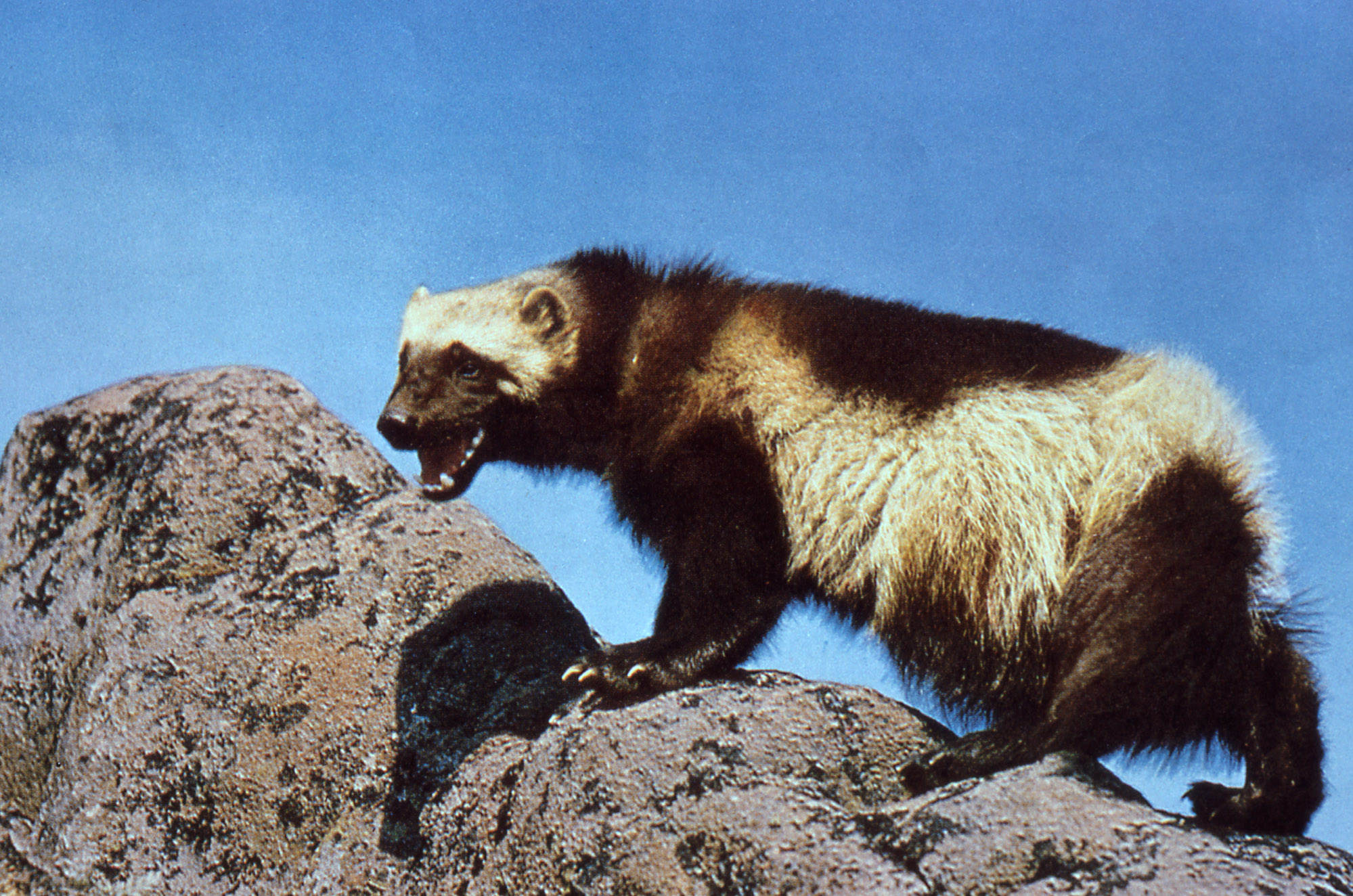
The federal government has repeatedly refused to protect the wolverine, despite the species’ consistently falling numbers. Photo credit: Steve Kroschel / U.S.Fish & Wildlife Services
Fewer than 300 wolverines remain in the lower 48 states, and global warming over the next 75 years is predicted to wipe out 63 percent of the snowy habitat they need to survive, government scientists have said. In fact changes due to climate warming are “threatening the species with extinction,” the Fish and Wildlife Service said in last year’s announcement of its protection proposal.
Now the memo—signed by Noreen Walsh, director of the Rocky Mountain Region of the Fish and Wildlife Service—tells federal scientists to set aside those conclusions, even though there has been no new science casting doubt on those findings.
“The Obama Administration’s own scientists have said for years that global warming is pushing wolverines toward extinction, and now those conclusions are being cast aside for political convenience,” said Noah Greenwald, endangered species director at the Center for Biological Diversity. “This is a bizarre and disturbing turn, especially for an administration that’s vowed to let science rule the day when it comes to decisions about the survival of our most endangered wildlife.”
Climate change is threatening the deep snow the wolverine relies on to live—everything from traveling to denning to raising kits. Photo credit: Wikimedia Commons
Fish and Wildlife Service scientists proposed Endangered Species Act protection for the wolverine in February 2013. Subsequently state officials in Montana, Idaho and Wyoming raised questions about the degree to which wolverines are dependent on persistent snow and about the degree to which warming will impact their habitat. In response Fish and Wildlife convened a panel of scientists to review the science behind the proposal, resulting in a report in which “nine out of nine panelists expressed pessimism for the long-term (roughly end-of-century) future of wolverines in the contiguous U.S. because of the effects of climate change on habitat.”
Based on the conclusions of the panel, scientists from the Montana field office of the Fish and Wildlife Service recommended that protection be finalized, but, as shown in the leaked memo, were overruled by agency bureaucrats.
“The decision to overrule agency scientists and deny protection to the wolverine is deeply disappointing and shows that political interference in what should be a scientific decision continues to be a problem under the Obama Administration, just as it was under George W. Bush,” said Greenwald. “Wolverines and the winter habitats they depend on are severely threatened by our warming world. Only serious action to reduce fossil fuels can save the wolverine, tens of thousands of other species and our very way of life.”
The Nature Blog Network, a nexus for the very best nature blogs on the net. If you're looking for outstanding blogging about birds, bugs, plants, herps, hiking, oceans, ecosystems, or any other natural topic -- or if you blog on those topics yourself -- this is the place for you!
Community
The Nature Blog Network community expands every single week. Check in regularly to meet our newest members or learn more about our weekly Featured Blog! If you're interested in nature blogs focusing on a specific topic or region, you'll love our Nature Blog Networking round-up every Tuesday.
A hiker has captured the fourth image of a wolverine to ever be spotted in California during a trip to the Sierras last month."The first day, I actually saw a bald eagle," recounted David Messa, according to Fox40.com. "I thought, well, is the trip going to get any better than this?"
The California native was on a hike when halfway through his four-day trip, he noticed an animal run across a lake mostly covered with snow and ice. Messa described the animal as being "like a bull in a China shop," and explained that it fell through the snow two or three times while he snapped photos.
"He just probably feared nothing," said Messa of the animal, speaking to the Sacramento news channel. "He was kind of galloping; actually fell through the snow two or three times, turned around and came back, and came across in front of me. I was actually able to get a photo."
David Messa' snapshot of the Wolverine he saw in the Sierra Mtns
Wildlife biologists with Fish and Game and the Department of Forestry have confirmed that the photos of the animal are of a wolverine, said Messa.
The last time a wolverine was spotted in California was in 2008 when the motion sensor camera in the Tahoe National Forest caught images.
Wolverines are extremely rare and resemble small bears. They are the largest in the Mustelidae (weasels) family and are known to be able to kill prey many times the size of its own.
The animals are found mostly in the remote reaches of the Northern boreal forests and subarctic and alpine tundra of the Northern Hemisphere, among locations in Alaska, Nordic countries in Europe, western Russia, and Siberia.
Solitary animals, the wolverine spotted in California last month was alone.
In California recently, another rare sighting occurred when a lone gray wolf was photographed in Lassen County. The male animal is believed to still be in the area.
U.S. Fish and Wildlife Service on Friday proposed federal protection for wolverines imperiled by climate change — by nurturing survivors in the southern Rocky Mountains including Colorado.
Wolverines need heavy late-season snow to form dens and cache food, and the latest science finds that warming will cause 63 percent of habitat suitable for wolverines — mostly on federal land — to vanish by 2085. Colorado high-country offers a refuge with snow.
If "threatened" status is established — after a 90-day public comment period and scientific review — wolverines no longer could be hunted. Wolverines would be the second species facing extinction due to melting snow and ice, after polar bears, that the government is preparing to protect.
A few wolverines in Colorado, Wyoming and New Mexico are to be deemed "an experimental population" that would be shielded from impact "to allow re-introductions to occur," said Shawn Sartorius, lead wolverine biologist for the U.S. Fish and Wildlife Service.
State wildlife agencies would run the re-introductions. Federal authorities said backcountry skiing, snowmobiling, logging and "infrastructure development" do not pose significant threats to wolverines and that, under a "threatened" status, these activities could continue.
"This is the first cut through the red tape. There's a lot involved in these re-introductions," Sartorius said. "It's very sensitive because it is potentially 'endangered' if the rule is finalized and, with that, comes the potential for regulation which is frightening to a lot of people. The 'experimental population' status removes a lot of that real or perceived regulatory burden."
Federal biologists estimate there are about 250 wolverines in the lower 48 states. Predator-trapping and poisioning in the early 1900s nearly drove wolverines extinct.
Colorado wildlife commissioners a few years ago asked staffers to launch stakeholder discussions for a possible state effort to re-introduce wolverines.
A lone male wolverine, M56, who in 2009 wandered on his own from Wyoming into Colorado with a cigar-sized transmitter in his belly, has thrived in Colorado. M56 has roved as far as 100 miles from forests west of Fort Collins across Interstate 70 to the Mosquito Range mountains southeast of Leadville. The last signal was received in October from an area near Rocky Mountain National Park, Colorado Parks and Wildlife spokesman Randy Hampton said.
Introducing a mate for M56 would require an act of the state legislature, Hampton said. Stakeholders, including the ski industry, discussed re-introduction of a small population but, unable to reach a consensus, ended talks last year.
Friday's federal announcement "means we have got to take a look at this," Hampton said. "This re-energizes the conversation with stakeholders. We would look for that to happen sooner not later."
Federal species overseers regard that sort of collaboration as "exactly what we want to see - states taking the lead," Sartorius said. "We really don't want to interfere."
Colorado is "a last best hope," said Earthjustice attorney Tim Preso, who helped compel the government to consider protecting wolverines.
"If wolverines could be re-established in Colorado, it would provide at least some insurance policy against the habitat loss that is expected to occur."